


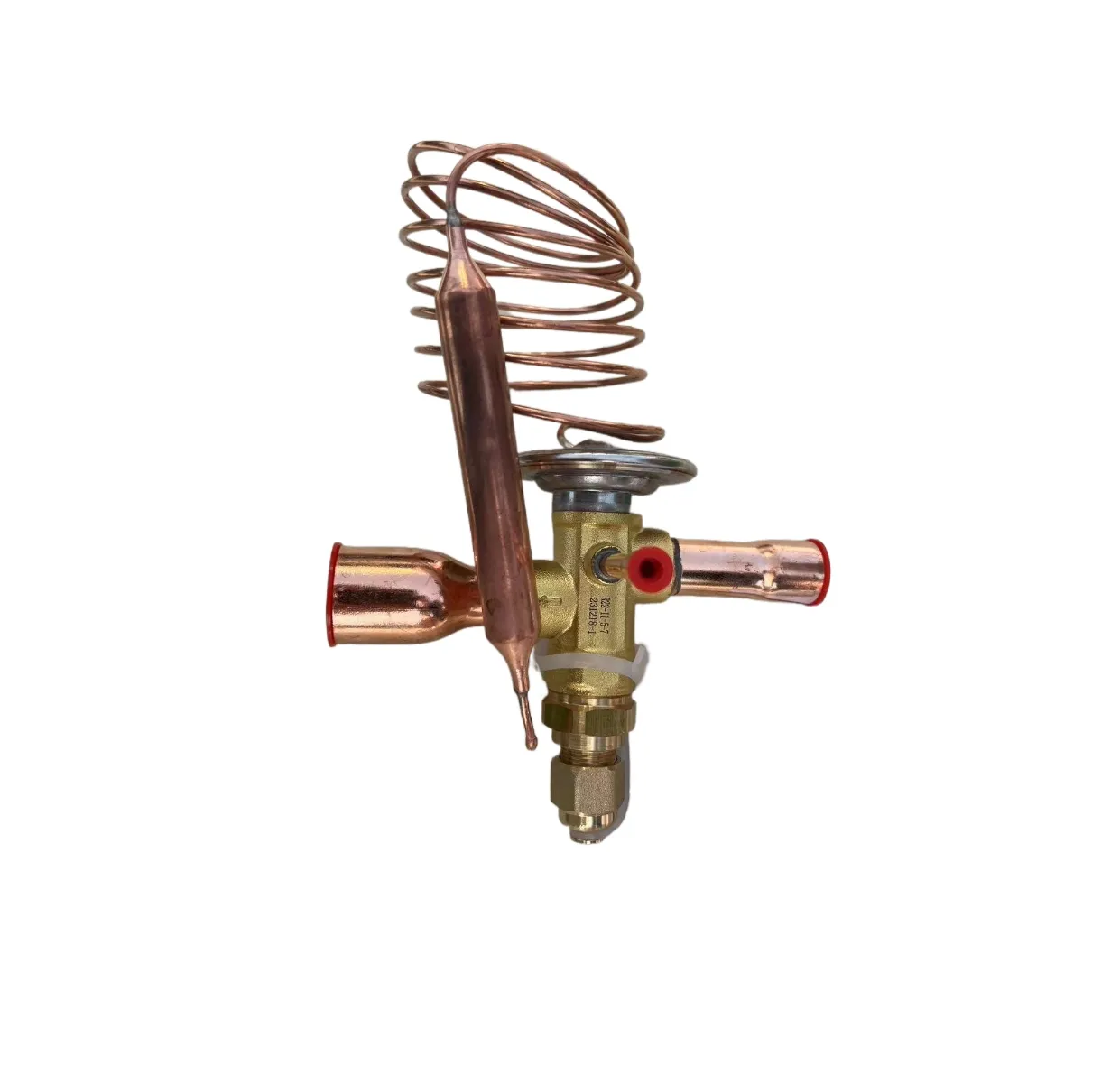
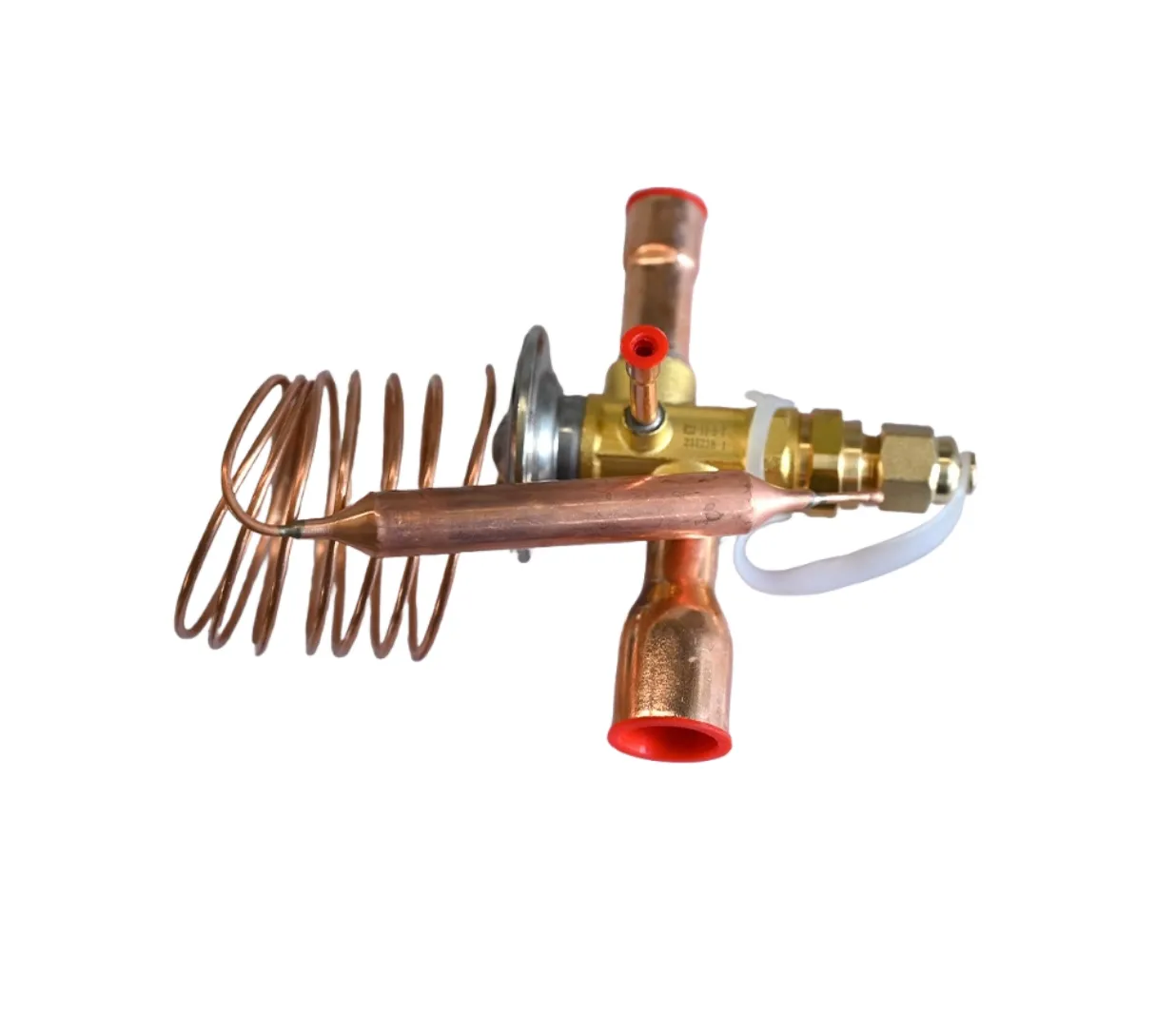
expansion valve
The key throttling component in the refrigeration system is responsible for depressurizing and throttling the high-temperature and high-pressure liquid refrigerant output from the condenser, and converting it into low-temperature and low-pressure mist refrigerant, providing conditions for efficient heat exchange in the evaporator. It is the core "bridge" connecting the high-pressure side and the low-pressure side of the refrigeration system. It is widely adapted to air conditioners, cold storages, heat pumps and other equipment.
Details
1. Product description
Expansion valves can be divided into thermal expansion valves, electronic expansion valves, capillary expansion valves, etc. according to the control method. Thermal expansion valves and electronic expansion valves are the most widely used; the core structure includes valve body, valve core (or orifice), temperature sensing package (thermal type)/electronic controller (electronic type), spring and other components; The compatible refrigerant types include R32, R410A, R22 and other mainstream models. The interface specifications are mostly threaded or welded, which can match refrigeration pipelines of different diameters. The operating temperature range is usually -50℃~80℃, which can adapt to the needs of different refrigeration scenarios such as cold storage low temperature and air conditioning normal temperature.
2. Product features
① Precise throttling: The thermal expansion valve senses the evaporator outlet temperature through the temperature sensing package and automatically adjusts the opening of the valve core; the electronic expansion valve receives temperature and pressure signals from the controller to accurately control the throttling flow to ensure that the refrigerant supply matches the evaporator load and avoids "insufficient liquid supply" or "liquid hammer" problems.
② High efficiency and energy saving: Reasonable throttling effect can improve the heat exchange efficiency of the evaporator and reduce the ineffective power consumption of the compressor. Compared with the traditional capillary tube, the electronic expansion valve can improve the energy efficiency of the system by 10%-20%, especially under variable load conditions, the energy saving advantage is more obvious.
③ Stable and reliable: The valve body is made of corrosion-resistant metal material (such as brass, stainless steel), and the components have strong sealing properties and can resist refrigerant corrosion and system pressure fluctuations. The service life can reach 5-8 years under normal use, and the maintenance cost is low.
④ Strong adaptability: Different types of expansion valves can match different systems such as household air conditioners, commercial cold storages, and industrial refrigeration units. Some electronic expansion valves support wide-range flow adjustment to meet the needs of complex working conditions.
3. Main purposes
①Air conditioning system: used for household split air conditioners and commercial central air conditioners to throttle and reduce the pressure of high-pressure liquid refrigerant to provide low-temperature refrigerant for indoor evaporators to achieve indoor cooling.
② Cold chain storage: Adapted to the refrigeration system of cold storage and refrigerated cabinets, precise throttling ensures the stable output of cold energy from the evaporator, and maintains a freezing environment below -18°C or a refrigerated environment of 0°C-8°C to ensure the freshness of ingredients and medicines.
③Heat pump system: In air source heat pumps and ground source heat pumps, the expansion valve cooperates with the system reversing valve to not only throttle and reduce pressure during cooling in summer, but also adjust the refrigerant flow during heating in winter to improve the heating efficiency of the heat pump.
④Industrial refrigeration: Industrial refrigeration equipment (such as reactor cooling, freeze dryers) used in chemical, food processing and other industries to provide a stable low-temperature environment for the production process and ensure the smooth progress of the industrial process.