


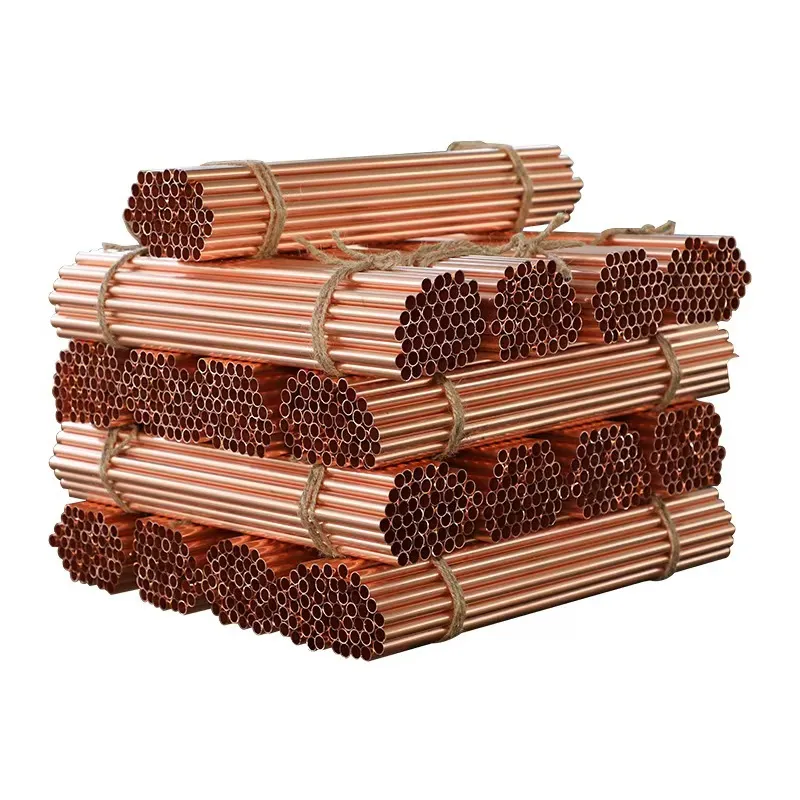
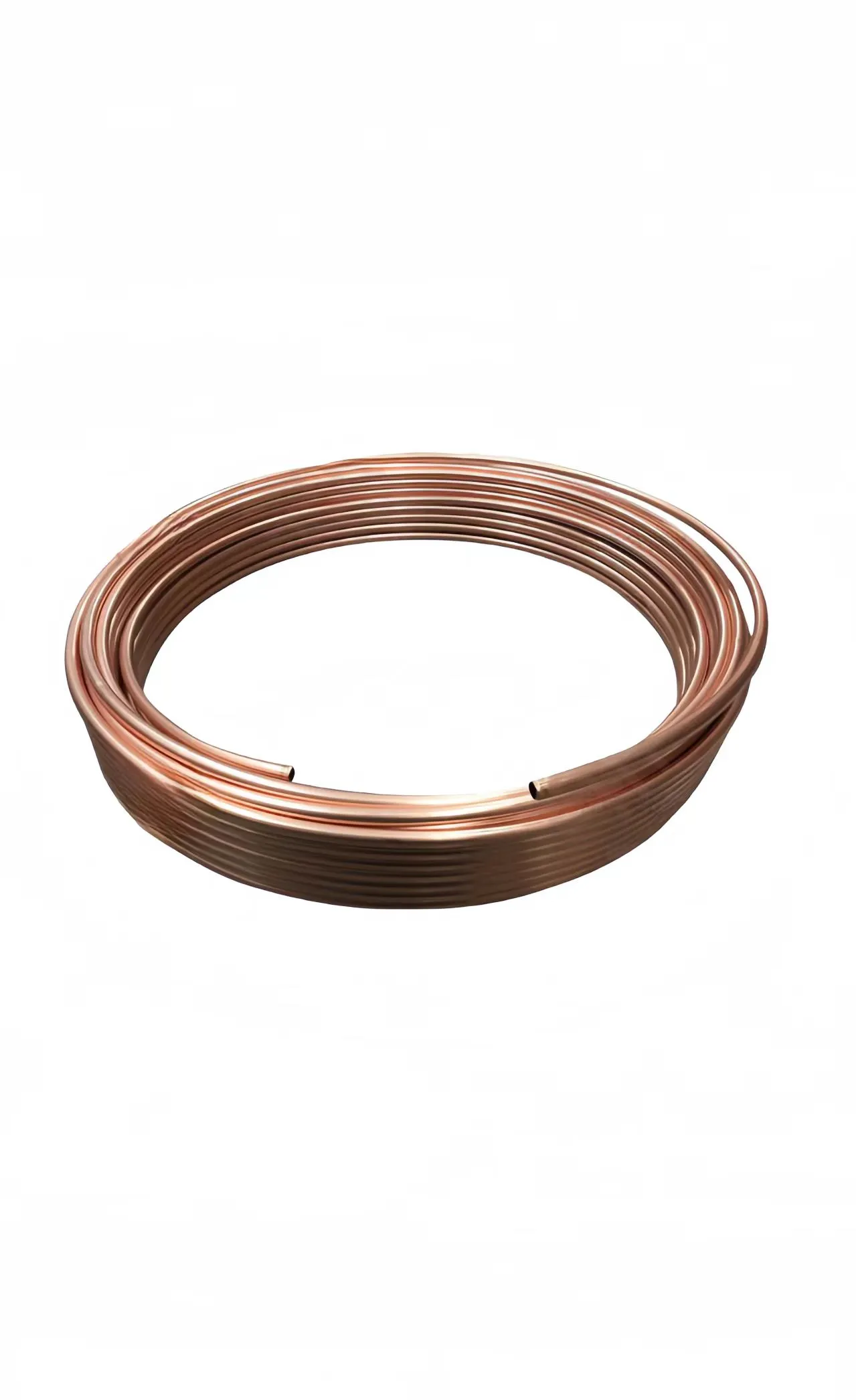
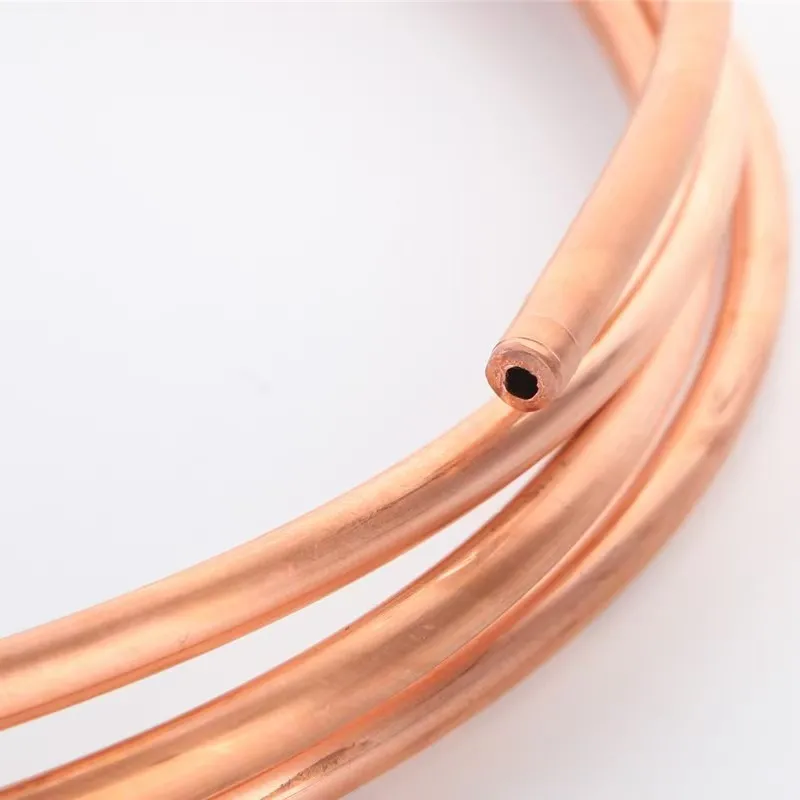
copper pipe
Tubular metal materials made of copper as the main raw material are widely used in many fields such as refrigeration, plumbing, and electronics due to their excellent thermal conductivity, corrosion resistance, and plasticity. They are key basic materials in industrial production and livelihood projects.
Details
1. Product description
Copper tubes are mostly circular cross-sections (square, rectangular and other special-shaped cross-sections can also be customized), and the outer diameter usually ranges from a few millimeters to tens of millimeters. The wall thickness is divided into thin-walled and thick-walled according to pressure-bearing requirements. The raw materials are mainly pure copper (T2) or copper alloys (such as brass, phosphorus deoxidized copper), and the surface can be degreased, pickled or nickel-plated to improve corrosion resistance and appearance cleanliness. Common connection methods include welding, threaded connection, and compression connection to adapt to different installation scenarios.
2. Product features
① Strong thermal conductivity: The thermal conductivity is much higher than that of steel pipes and plastic pipes. It can quickly transfer heat and cold in the refrigeration system, improving the heat exchange efficiency of the equipment. It is also suitable for scenarios where heat conduction is required such as radiators and condenser tubes.
② Corrosion resistance and durability: The copper surface easily forms a dense oxide film, which can resist the corrosion of water, air and most weak acid and alkali media. It has a service life of more than 50 years under normal use, reducing later maintenance costs.
③Excellent plasticity: easy to bend and stretch, can be made into complex-shaped pipelines, suitable for narrow or special-shaped installation spaces, especially suitable for piping arrangement inside refrigeration units and home appliances.
3. Main purposes
① Refrigeration field: As the core pipeline of air conditioners, refrigerators, and cold storage, it is used to transport refrigerant. Due to its good thermal conductivity and low temperature resistance, it ensures the stable operation of the refrigeration system.
②Plumbing and HVAC: used for water supply pipes (such as drinking water pipes) and floor heating pipes in residential and commercial buildings. It is hygienic, non-toxic and not easy to scale, and meets drinking water safety standards.
③Electronics and industry: Produce heat pipes for electronic equipment, copper pipes for transformer windings, and corrosion-resistant transportation pipelines in the chemical industry and shipbuilding fields, adapting to a variety of harsh working conditions.